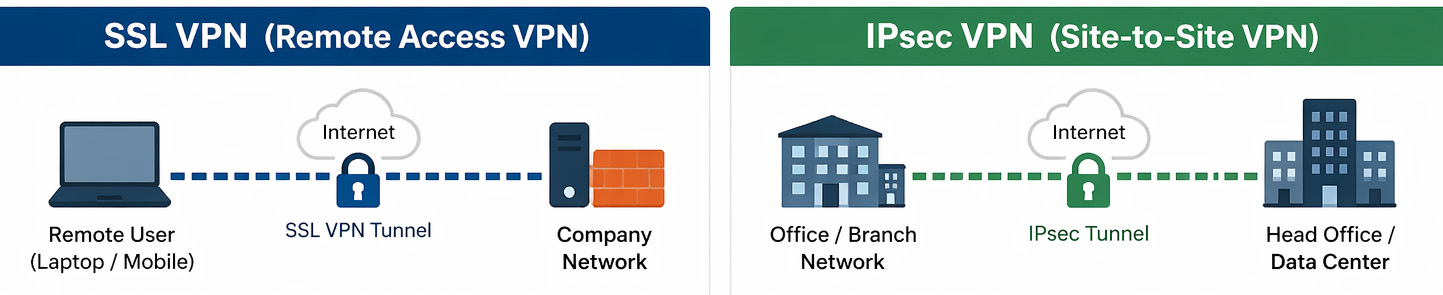
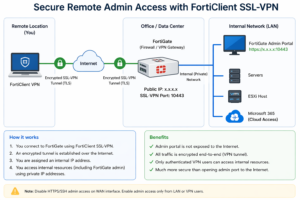
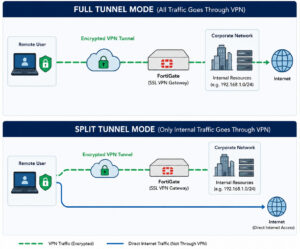
SSL VPN (Secure Sockets Layer Virtual Private Network) An SSL VPN is a type of remote access VPN that allows users to securely connect to a private network through a web browser or lightweight client using SSL/TLS encryption. It is widely used for remote work because it provides secure access to internal applications and resources without requiring complex setup. SSL VPN is typically more user-friendly and works well across different devices, including laptops, tablets, and smartphones.
IPsec VPN (Internet Protocol Security Virtual Private Network) An IPsec VPN is a network-level VPN technology that creates a secure, encrypted tunnel between two networks or devices over the internet using the IPsec protocol suite. It is commonly used for site-to-site connections (such as linking branch offices) as well as remote access. IPsec operates at a lower network layer than SSL VPN, providing strong security and full network access, but often requires more configuration and client setup.
Simple conclusion:
SSL VPN → popular for remote users (easy access)
IPsec VPN → popular for site-to-site network connections (enterprise backbone)